
Journalist Paris Marx’s new book, Hyperscale, explores the growing impact of data centers and generative AI, taking readers inside the massive facilities that power modern digital services. The book examines how computing infrastructure, which has existed for decades, has suddenly become a major political and environmental issue as technology companies accelerate their data center expansion.
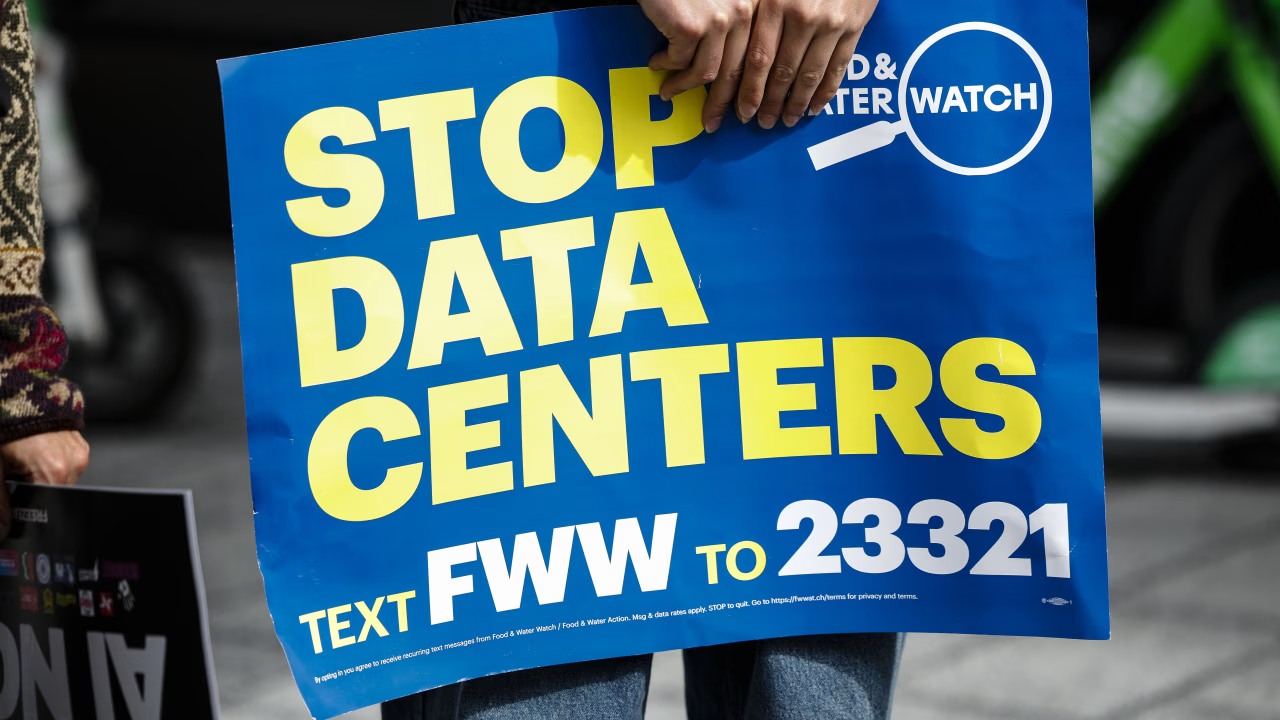
The subject has become increasingly relevant as opposition to new data center projects gains momentum across the United States. Concerns over rising electricity bills, water consumption, environmental damage and the impact on local communities have turned data center construction into a politically sensitive issue. The growing resistance is also emerging as a broader challenge to the power and influence of major technology companies.
How to Secure Your Google Account in 2026: 12 Essential Steps
In an interview with TechCrunch, Marx described the current data center expansion as fundamentally unsustainable and incompatible with the goal of maintaining a livable planet. He argued that these facilities have become an obvious target for public frustration because their impact is directly visible in the communities where they are built.
Unlike digital services that people access through smartphones and computers, data centers create physical consequences. Their operations can affect electricity prices, water availability, noise levels and the overall quality of life for nearby residents. These concerns have brought together people from different political backgrounds, making opposition to large-scale data center projects an increasingly bipartisan issue.
Marx explained that getting access to a hyperscale data center for his research was far from easy. Before the recent generative AI boom, researchers could reportedly visit these facilities more easily. However, as public attention toward data centers increased, technology companies became more reluctant to provide access. Marx contacted several companies but either received no response or was directly denied permission.
After visiting data center locations in northern Virginia and Ireland, he eventually traveled to New Zealand, where he managed to enter one of the facilities. What surprised him most was the extensive security surrounding the infrastructure. Visitors had to submit their passports in advance, undergo identity checks and pass through multiple locked doors requiring key-card access.
Inside the server rooms, the environment was quite different from what he had imagined. Rather than looking like a mysterious or futuristic technological facility, the space was largely industrial and functional. Tall racks filled with computer hardware occupied the room, while powerful air-conditioning systems kept the equipment cool.
The noise was another striking feature. Thousands of server fans operated continuously, creating a loud and piercing atmosphere. Marx noted that anyone spending an extended period inside such a room would probably need ear protection.
His interest in data centers initially developed after learning about several environmental and community-related disputes. One major example involved Santiago, Chile, where communities raised concerns about water consumption as companies such as Google and Microsoft developed data center infrastructure.
Another significant case emerged in Ireland, where data centers eventually accounted for more than 20% of the country’s electricity consumption. Their growing demand placed pressure on the national power grid and contributed to concerns about electricity costs. In 2022, the grid operator introduced restrictions on new data center connections around Dublin, demonstrating that the problem existed even before the generative AI boom.
Marx also highlighted the situation in The Dalles, Oregon, where Google established its first company-owned data centers approximately two decades ago. When the company sought additional water supplies for further expansion, local residents began questioning how much water its existing facilities were consuming.
A journalist from The Oregonian requested information about Google’s water usage from the city but faced legal action instead of receiving an immediate answer. Around a year later, the information became public, revealing that Google’s data centers were consuming approximately 29% of the city’s water supply.
These examples convinced Marx that data centers were creating significant pressures in communities around the world and that similar conflicts would become more common as technology companies expanded their infrastructure to support generative AI.
According to Marx, the problem is not simply the existence of data centers but the enormous scale at which technology companies are now building them. Hyperscale facilities require massive amounts of electricity, water and other resources. When the cumulative environmental impact is considered, he believes the current expansion is incompatible with a sustainable future.
He also criticized the ambitions of major technology companies and their executives, arguing that their vision of technological progress often prioritizes corporate influence and financial growth while transferring the environmental and social costs to ordinary people.
The expansion of generative AI has made these concerns even more significant. Technology companies initially promoted artificial intelligence as a tool that would improve productivity, strengthen healthcare and education services, and deliver substantial economic benefits. However, Marx questioned whether these promises have actually materialized on the scale originally suggested.
Meanwhile, the environmental costs continue to grow, alongside wider social concerns involving chatbot dependence, misinformation, deepfakes and the influence of social media platforms.
Marx believes this combination of environmental and social pressures explains why resistance to the technology industry has become so widespread. Data centers have become a particularly visible target because communities can directly experience their effects.
He also pointed to growing opposition against other physical technologies, including Flock surveillance cameras, Meta’s smart glasses and Waymo’s self-driving vehicles. These technologies represent a broader public debate about how much influence technology companies should have over everyday life.
While people can delete an application from their phones, challenging a physical infrastructure project is a different matter. Local communities can organize, question construction plans and demand changes to projects that directly affect their surroundings.
Technology companies have started responding to this resistance in several ways. Microsoft, Amazon and OpenAI have made commitments to move away from using non-disclosure agreements in negotiations with local governments. Marx believes this is a positive development because it could make information about proposed projects more accessible to residents.
However, he does not expect the change to make a major difference by itself. Companies are adjusting their public positions partly because secrecy has become counterproductive. When residents discover that a data center is coming to their area but cannot obtain clear answers about its potential impact, opposition is likely to become stronger.
Companies have also promised to cover more of the electricity infrastructure costs associated with their facilities, reducing the financial burden on ordinary electricity consumers. Other proposals involve changing cooling technologies to reduce water consumption.
Marx, however, remains skeptical of the industry’s environmental arguments. He believes technology companies increasingly focus on water consumption because they have struggled to defend the energy requirements of their data centers, particularly their reliance on fossil fuels.
He explained that companies often use national water consumption figures to argue that data centers are not major consumers compared with agriculture or golf courses. But this comparison overlooks the fact that water availability is fundamentally a local issue.
A community experiencing water shortages may face serious difficulties when a large data center begins competing for the same limited resources. National averages cannot accurately represent the pressures experienced by individual towns and regions.
Another industry response has been the adoption of closed-loop cooling systems. Traditional evaporative cooling requires a continuous supply of water because some of it evaporates during the cooling process. Closed-loop systems instead circulate a fixed amount of water within the facility.
Although this approach can significantly reduce direct water consumption, it requires additional electricity to keep the circulating water cool. Marx argued that companies often emphasize the reduction in water use without adequately discussing the additional energy requirements.
There are also concerns about the chemical coolants used inside these systems. Communities have questioned what could happen if these substances leak and contaminate nearby water supplies.
For Marx, the central issue remains the scale of the infrastructure being developed. He does not oppose technology or data centers in general. Such facilities have supported digital services for decades without generating the same level of public resistance. The problem, in his view, is the rapid expansion of increasingly large facilities and the enormous resources required to operate them.
He also questioned whether the benefits of generative AI justify these costs. If communities are expected to accept higher electricity demand, environmental pressures and increased emissions, there should be meaningful public benefits in return. However, many people remain unconvinced that current AI systems are delivering the economic and social improvements promised by the industry.
Marx further challenged the idea that technological progress follows a single inevitable path. He argued that influential technology executives frequently present their preferred vision of the future as something society must eventually accept, with the only uncertainty being how quickly it will happen and which companies will profit most.
He believes this narrative limits public discussion about alternative ways of developing technology. Society can choose different priorities, invest resources in different areas and build systems around public needs rather than the ambitions of a small number of powerful companies.
One possible alternative is digital sovereignty, which involves reducing dependence on major US technology companies and developing independent digital infrastructure. However, Marx warned that simply replacing American technology companies with local corporations would not necessarily solve the underlying problems if those companies continued following the same profit-driven business models.
He also emphasized the importance of public-sector investment in technology. Governments, he argued, should play a greater role in developing digital services and infrastructure rather than leaving technological development almost entirely to private companies.
Recent technology disruptions and disputes have highlighted the risks of relying heavily on a small number of dominant providers. From major service outages to concerns about schools being pressured to adopt proprietary AI tools, these developments demonstrate how much control large technology companies can exercise over essential digital services.
Marx believes this creates an opportunity to reconsider how society develops and manages technology. Instead of continuing to invest enormous resources in infrastructure designed primarily to support corporate ambitions, governments and communities could prioritize systems that deliver genuine public benefits.
Ultimately, Hyperscale argues that the debate surrounding data centers is about much more than electricity consumption, water shortages or artificial intelligence. It raises fundamental questions about who controls technological development, who benefits from it and who is expected to bear its costs. For Marx, building a more sustainable technological future requires moving beyond the assumption that bigger infrastructure and more powerful technology automatically represent progress.